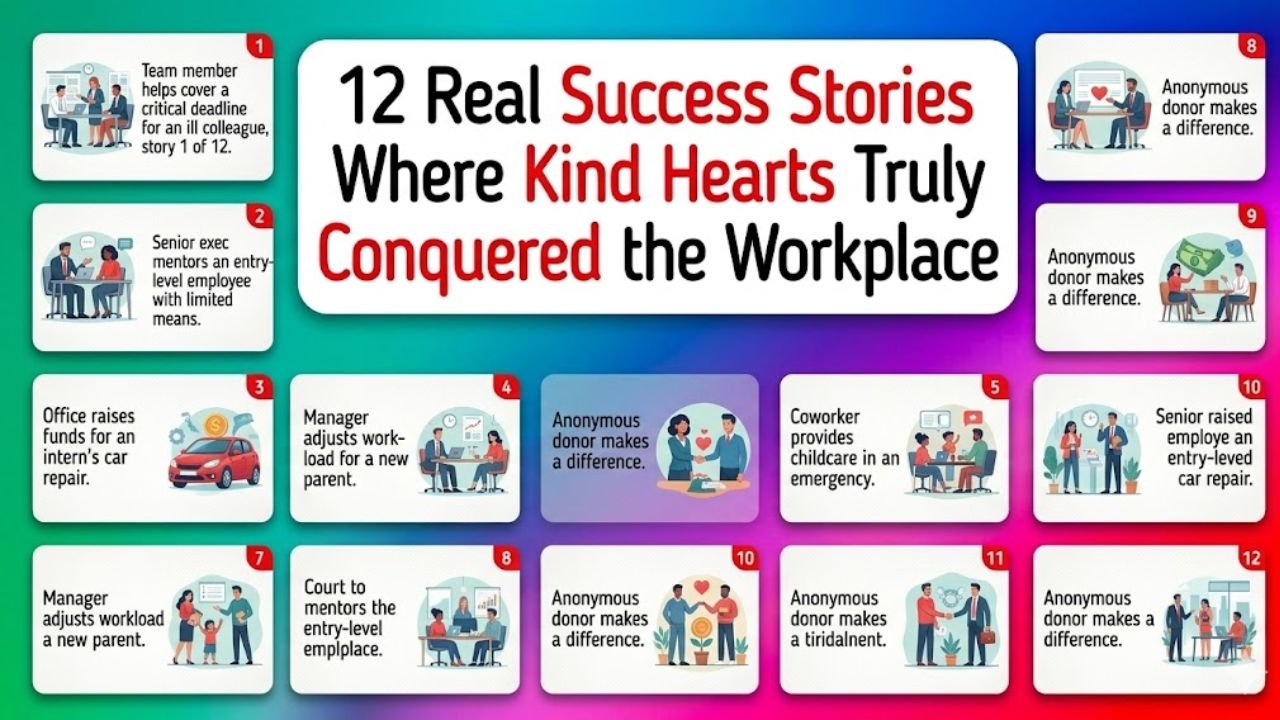
Work environments often feel demanding but genuine kindness and compassion can change everything. These small acts of empathy and care turn difficult moments into positive experiences. They prove that human connection makes even the most stressful jobs feel meaningful. When people choose to support one another it creates a sense of belonging and loyalty that no corporate policy can replace.
Table of Contents
Why Empathy and Compassion Matter in Professional Settings
Kindness is not just a soft skill but a fundamental part of a healthy work culture. When leaders or colleagues show true care it boosts morale and reduces burnout. Empathy allows employees to feel seen and heard during personal or professional crises. These moments of support often define how long a person stays with a company. A compassionate response to a mistake or a personal emergency builds a foundation of trust that lasts for years.
Real Examples of Compassionate Acts at Work

Small gestures often have the biggest impact on how employees view their roles. Whether it is a manager defending a junior staff member or a coworker sharing the workload these actions stay in our memories.
- A manager allowing an employee to leave early for a family emergency without cutting pay.
- A senior doctor performing cleaning tasks so a worker could visit her sick child.
- A coworker staying late to review security footage and prove a colleague was innocent of a mistake.
- An experienced employee taking the blame for a system error to protect a newcomer.
- A flight attendant paying a baggage fee for a mother carrying medical supplies.
The Financial Impact of Supportive Work Cultures
A supportive workplace does more than just make people happy it also improves the bottom line. Companies that prioritize the well being of their staff see higher productivity and lower turnover rates. When people feel safe they are more likely to innovate and take calculated risks.
| Category | Impact of Kindness | Business Result |
| Employee Retention | Staff feel valued and stay longer | Reduced hiring and training costs |
| Productivity | Lower stress levels lead to focus | Higher quality of work and output |
| Team Collaboration | Increased trust between coworkers | Faster problem solving and innovation |
| Brand Reputation | Positive word of mouth from staff | Attraction of top tier talent |
Transforming Stress Into Positive Team Energy
At a busy call center a coworker stepped in to handle difficult calls for a friend who was overwhelmed by an angry customer. This simple act of switching places allowed the stressed employee to recover and feel supported. Even though the colleague missed out on a performance bonus for that day the bond they formed was more valuable. Such acts show that everyone needs a helping hand sometimes and that missing a metric is worth the price of a healthy teammate.
How Leadership and Kindness Redefine Authority
True leadership is often found in quiet sacrifices rather than loud orders. An older tailor once accepted a warning meant for a young employee to protect her from being judged unfairly by management. In another instance a department head at a hospital adopted children with health issues to ensure they had a loving home. These actions reveal that the most respected people are those who use their power to lift others up. Authority gained through compassion is far more powerful than authority gained through fear.